Have you ever wondered why vision boards have become a popular tool for self-improvement and motivation? Their foundation lies in vision board psychology, a field that explores how visual stimuli can influence your cognitive processes and emotions. Through the use of images representing your dreams and objectives, vision boards play a crucial role in goal reinforcement. These visual tools serve not just to inspire you but also to foster a clear focus on your aspirations.
As research has shown, individuals who utilize such effective goal strategies often experience enhanced self-efficacy beliefs and reduced stress, as they keep their goals at the forefront of their minds. When you engage in motivational psychology, creating a vision board becomes more than just an artistic endeavor; it transforms into a strategic approach that can significantly improve your chances of achieving your goals. Combined with cognitive techniques, these boards help prime your brain to notice opportunities and prioritize what truly matters in your journey toward success.
Understanding Vision Boards
An effective tool for goal setting, vision boards play a significant role in clarifying your intentions and reinforcing your aspirations. Utilizing mental imagery, vision boards visually represent your desired life over a specific timeframe, such as a year. This smart technique enhances motivation and commitment, making aspirations feel more tangible. Studies suggest that by keeping your dreams at the forefront, vision boards can significantly boost your chances of achieving your goals.
Definition and Purpose
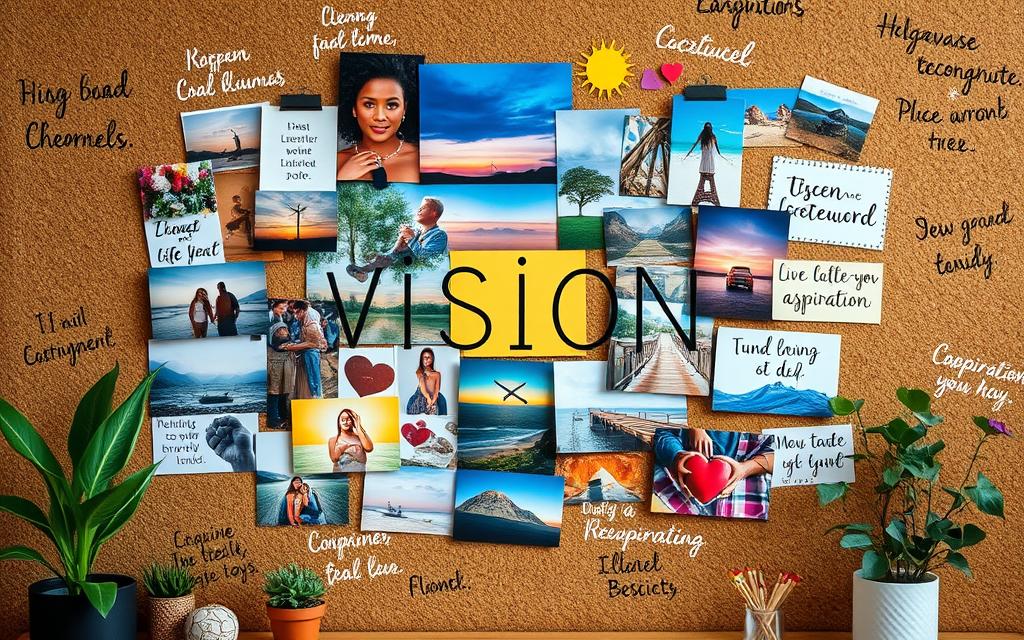
A vision board is essentially a collage crafted from images, words, and phrases that embody what you want to achieve. By integrating visualization science, you create a mental picture of your goals that communicates directly with your subconscious mind. This tool not only facilitates self-awareness but also stimulates positive emotions, resulting in increased optimism and greater opportunities for success. The act of regularly engaging with your vision board reinforces your dedication and helps maintain focus on your objectives.
Historical Context
The roots of vision boards extend back several decades, gaining traction particularly in self-development communities. Prominent personalities like Oprah Winfrey have advocated for this practice, helping ignite widespread interest. Various forms such as mood boards and journey boards highlight versatility while maintaining the same essential purpose. As a personal growth tool, vision boards encourage individuals to develop a creative expression of their goals and desires, merging visualization and personal agency in the pursuit of their dreams.
The Science of Visualization
Exploring visualization science reveals fascinating insights into how our minds perceive and engage with goals. Research indicates that vivid mental imagery often engages the brain in a manner similar to real-life experiences. This cognitive technique has drawn the attention of many successful individuals, showcasing its transformative potential in achieving desired outcomes. Notably, vision boards serve as effective tools in amplifying this effect by consistently presenting personal goals visually.
Visualization Science Explained
Visualization is a cognitive process that involves creating detailed mental images of desired outcomes. Functional MRI studies demonstrate that when individuals visualize their goals, it activates regions in the brain akin to actual experiences. This phenomenon is especially advantageous for athletes, as a study published in the Journal of Sports Sciences indicates that those who engage in visualization outperform their counterparts. As the mind fails to differentiate between real and imagined experiences, this enhances motivation and builds self-efficacy, promoting further action toward goal reinforcement.
Impact on Motivation
Vision boards enhance motivation through a psychological mechanism known as “value-tagging.” This concept highlights how the brain places greater significance on images than on written words. Frequent exposure to visual cues related to personal ambitions conditions your mind to remain focused on specific goals. Such cognitive techniques not only increase your motivation but also facilitate the alignment of thoughts, emotions, and actions towards accomplishing these aspirations. Research supports the idea that regular engagement with visualization leads to improved self-confidence and an enhanced belief in one’s capacity to achieve success.
| Study | Finding |
|---|---|
| Journal of Sports Sciences | Athletes using visualization techniques outperform peers who do not. |
| TD Bank Survey | Individuals using vision boards showed nearly double the confidence in achieving goals. |
| Harvard Business Study | 3% of MBA graduates with documented goals earned ten times more than others. |
| Journal of Psychology and Education | Visualization practices significantly enhance motivation and confidence. |
Vision Board Psychology
Understanding the psychological mechanisms behind vision boards provides valuable insights into their effectiveness in goal reinforcement. Neuroscientific research underscores how engaging with vision boards can create a focused mental state that enhances motivation and promotes positive emotions.
Neuroscience Behind Vision Boards
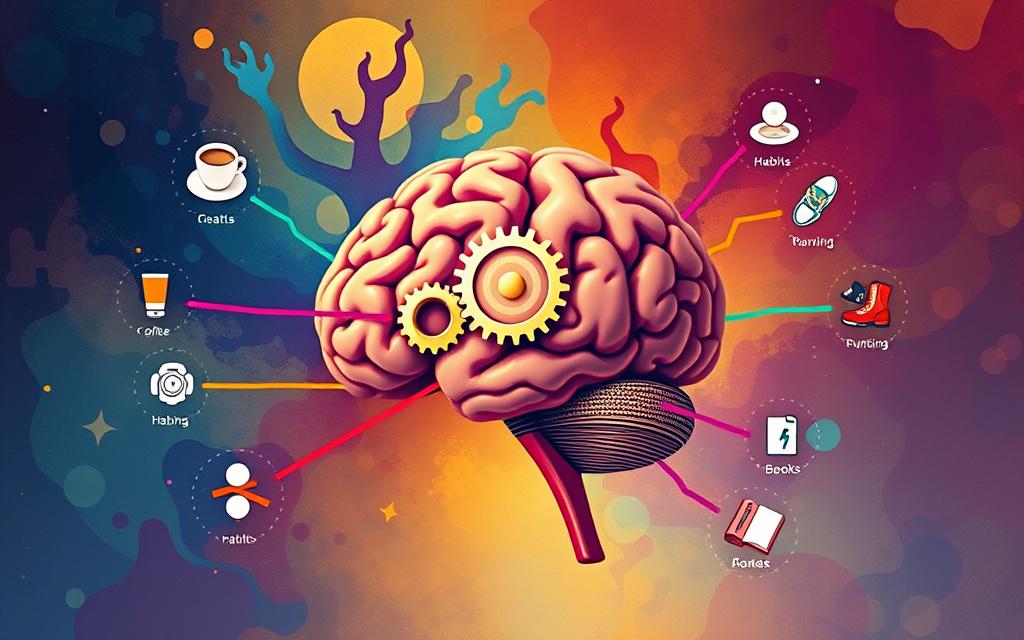
Neuroscientific studies indicate that consistently viewing a vision board can activate specific neural pathways tied to your goals. This process can prime your brain to notice opportunities that might otherwise be overlooked. The “Tetris effect,” a phenomenon where repetitive exposure shapes subconscious thought processes, suggests that imagining yourself accomplishing a goal significantly increases the likelihood of its realization. Regular engagement with a vision board may even diminish the physiological fear response you might feel when facing new challenges.
Positive Emotions and Goal Setting
Creating a vision board is often linked to heightened positive emotions. Activities like journaling, meditation, and visualization boost emotional awareness, fostering a mindset conducive to achieving long-term aspirations. Research shows that influencers of positive emotions can enhance your capacity to manifest your dreams. With a typical focus on the next 12 months, vision boards serve as effective tools for clarifying intentions and charting a path toward success.
| Aspect | Impact |
|---|---|
| Imagery Effect | Activates neural pathways related to goals |
| Emotional State | Boosts positive emotions through creative engagement |
| Action Likelihood | Increases propensity to act on goals |
| Stress Reaction | Reduces fear response to new challenges |
| Social Accountability | Sharing goals enhances support and success rate |
Creating an Effective Vision Board
Creating a vision board is a powerful step in manifesting your goals and dreams. This process involves not just artistic expression but also setting clear intentions and selecting materials that truly resonate with your aspirations. The interplay between effective goal strategies and mental imagery significantly enhances the potential of your vision board.
Setting Intentions
Begin by reflecting on what you genuinely desire in life across various areas, such as career success, health, relationships, and personal growth. Your intentions should align with your core values to amplify your sense of fulfillment. Research indicates that establishing specific goals can reduce ambiguity and enhance confidence. This is where visualization science plays a vital role. By visualizing what you want, you can cultivate a positive mindset leading to tangible outcomes.
Choosing Effective Materials
Gather visual elements that echo your aspirations. Consider magazine clippings, personal photos, quotes, and affirmations as your primary materials. These items should be arranged creatively on your board to stimulate inspiration and motivation. You might want to ensure that your vision board remains a focal point in your home, displayed prominently so you see it regularly. This constant reinforcement serves to remind you of your intentions and encourages the Law of Attraction to bring the necessary resources and opportunities for your goals.
| Goal Type | Example | Materials to Use |
|---|---|---|
| Career | Make $100,000 in a year | Income milestones, inspirational quotes |
| Health | Run a marathon | Fitness images, motivational phrases |
| Relationships | Strengthen family bonds | Family photos, loving affirmations |
| Personal Growth | Learn a new language | Material related to language learning, progress milestones |
There is no universally ideal number of goals for a vision board; the focus should depend on your personal vision and commitment. Utilize both physical and digital formats for your vision board, catering to your preferences. This tool serves as a daily motivator, reminding you to take meaningful steps toward your aspirations.
Conclusion
In your journey toward achieving your aspirations, understanding vision board psychology can be a transformative experience. These boards serve not merely as decorations but as powerful tools for goal reinforcement that can enhance your focus and motivation. When combined with effective goal strategies, such as actionable steps and persistence, vision boards can act as a vital catalyst for personal growth and success.
While scientific studies suggest that simple visualization techniques may not always have the desired outcomes—like in cases where individuals fantasized about success without taking action—it’s essential to recognize that actively engaging with your vision can yield far better results. For example, golfers who imagined themselves training were more successful than those who merely envisioned victory. This illustrates the importance of grounding your aspirations in reality.
Embracing the process of creating a vision board can also encourage self-reflection and identity exploration, especially for those in under-resourced educational settings. By using this creative tool, you can tap into your imagination, articulate your goals, and boost your self-efficacy beliefs. Ultimately, vision boards can lead to a better understanding of your aspirations while empowering you to pursue them with confidence and clarity.